Shun and his mother
The Reason I JumpShun and his mother are joined by an attachment that survives his death but cannot at first be expressed or answered. Their relationship moves from ordinary domestic familiarity to an agonizing separation: Shun can visit and feel close to her, yet she cannot see or hear him. When her grief threatens her life, he chooses to return to her as a new child, giving up his identity and memories as Shun. The story’s conclusion does not erase the loss; it imagines the family’s bond continuing through remembrance, a new daughter named Nozomi, and the mother’s gradual determination to live.
A familiar bond made unreachable
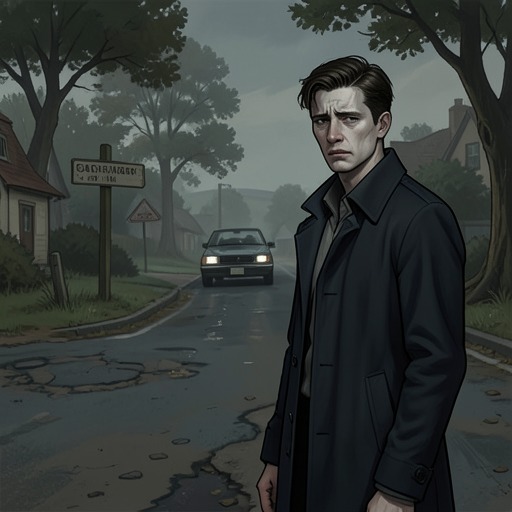
Before Shun understands that he has died, he returns home from the supermarket expecting the ordinary welcome of home. His mother is preparing supper, apron on and pan in hand. He opens the fridge for juice and starts to tell her about his day, but the words dry up: she stands before him with the same appearance as before, and Shun cannot move. The familiar domestic scene has become strange and frightening. He flees outside, unable to understand why he cannot speak to or reach her.
The truth is that Shun was hit by a car that ran a red light on his way to the supermarket. When the old man tells him he died, the memory comes back: Shun had meant to dodge the car but froze. He breaks down at the realization that he is dead, then looks through the window at home and sees both his parents crying. His mother’s grief is now visible to him, but his presence offers no immediate way to comfort her.
Presence without communication
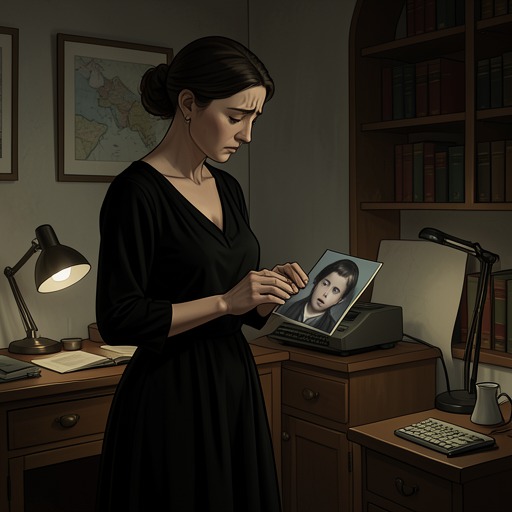
At the house, Shun approaches his mother in black clothes and sees how sad and crushed she looks. He apologizes to her inwardly for dying. A subtle breeze passes between them; although his mother apparently cannot see his body, her hand touches it. Shun feels the warmth he remembers from being very small and receiving her embrace. The encounter is at once a moment of closeness and proof of separation: physical comfort reaches him, but no shared conversation follows.
After going to Heaven, Shun sometimes visits his parents. He cannot speak to them directly, but seeing their faces and hearing them talk about him is enough to help him stay brave. That limited comfort becomes unbearable when he sees his mother staring at his photograph, not eating, and weeping that she wants to be where he is. Shun had thought she was recovering from his death. Instead, her grief remains so intense that she says she cannot go on living without him.
Grief and the choice to return
Shun stays beside his mother as she cries, gently embracing her shoulders even though she cannot know he is there. He believes things will eventually return to normal for both parents, but her continuing mourning forces him to recognize the gap between his invisible presence and the help she needs. Back in Heaven, he thinks about his parents every day and tells God that he cannot live happily there while they are suffering.
God offers a way for Shun to help: he can be born to his parents again as their child. The condition is absolute. Once reborn, he will no longer be Shun, and all memories of being Shun will disappear. The offer turns his love for his mother into a choice between retaining his own memories and returning to her in a life that will not remember their earlier relationship. The prospect fills him with joy, but the cost makes the decision consequential rather than a simple reunion.
The final separation and a new beginning
Years later, Shun sees his mother in delirium, calling his name and saying she wants to see him. He cannot reach her with his voice. Her words make him fear that the separation has taken her spirit and will to live; he understands his death as the source of her suffering and decides that he must do what he can to help. He asks God calmly to return him to his mother. This is the decisive act in their relationship: to ease her grief, Shun accepts the loss of his own remembered identity.
His mother later tells Shun’s father that Shun came to her in a dream and told her he was always there, so she should not cry anymore. She says she needs to pick herself up and put the pieces back together. The dream gives her a way to experience continuing connection, but it does not claim that her mourning has vanished. At the window, the first snow of the year falls; the story presents its crystals as formed from Shun’s tears and as proof that he once lived in the world. His father recalls that Shun loved snow, linking an ordinary winter scene to the family’s memory of him.
Kinship carried forward
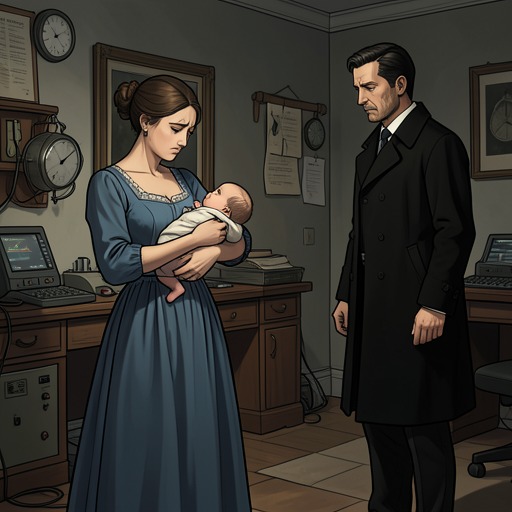
In the year after Shun’s decision, his parents have a baby girl, Nozomi, whose name signifies hope. Five years pass, and as Nozomi prepares to start kindergarten, her mother’s thoughts return to Shun: one day she will see him again, and until then she will manage. Her resolve is not framed as forgetting or finishing grief; it is a way to continue living while keeping the expectation of reunion.
Nozomi shares an affinity for things Shun loved. On the way back from the supermarket, she asks her mother to go see the cherry trees her brother used to love, and she wonders what kind of person he was. The relationship therefore extends beyond Shun’s inaccessible afterlife and his mother’s memories: his name and preferences enter the younger sister’s life, even though she knows him only through what has been passed on. The story holds together an irreversible death, a mother’s continuing bond with her son, and a renewed family life in which remembrance becomes one of the ways love endures.